Personalized Introduction
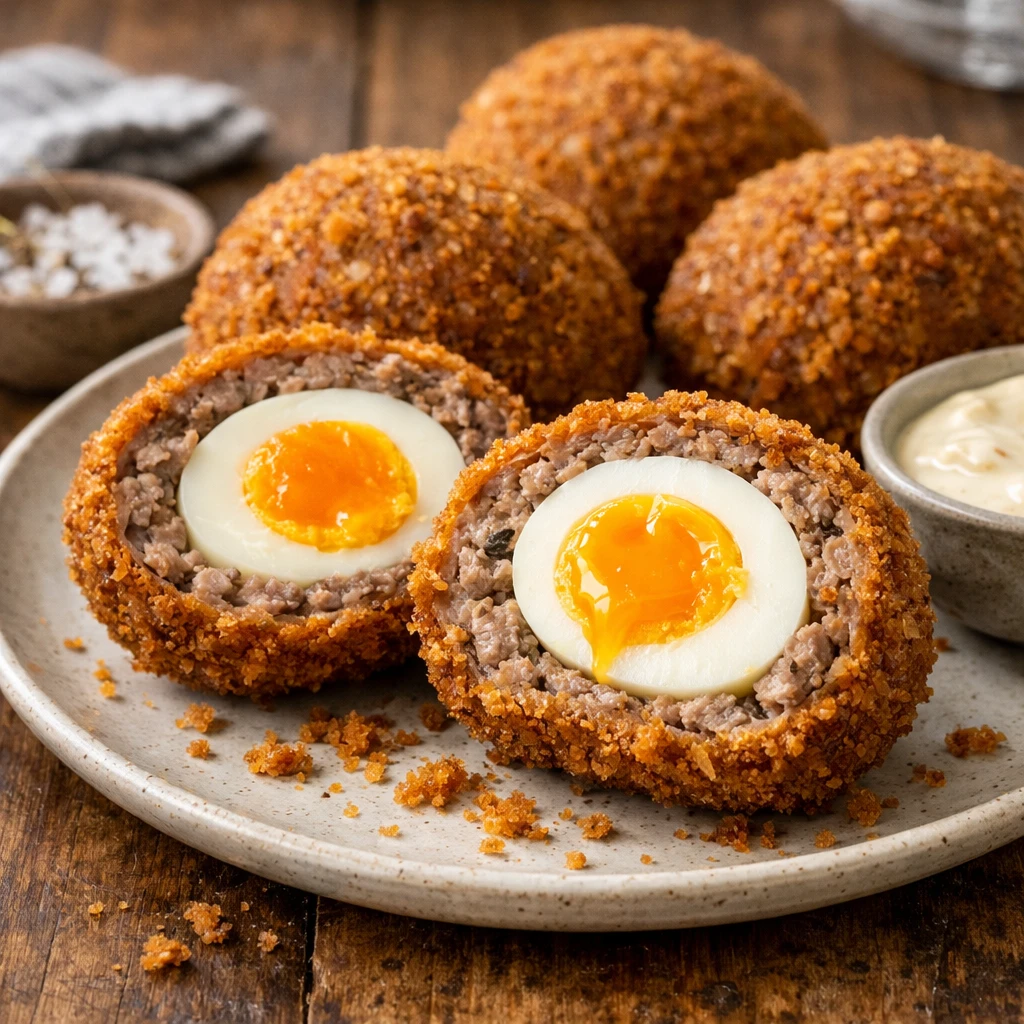
The very first time I tried a homemade Scotch egg, I honestly couldn’t believe how something so simple could taste so impressive. Imagine cutting into a perfectly golden, crispy shell only to reveal juicy seasoned sausage wrapped around a tender egg with a creamy yolk in the center. It instantly became one of those recipes I couldn’t wait to make again.
At first glance, Scotch eggs might seem like a recipe reserved for experienced cooks, but they’re actually much easier than they look. Once you understand a few simple techniques, you’ll discover they’re surprisingly fun to prepare. I love making them because they feel special enough for holidays and picnics, yet simple enough to enjoy for lunch, brunch, or even as a satisfying snack.
One of the things I appreciate most about Scotch eggs is their versatility. They’re delicious served warm straight from the fryer or oven, but they’re equally enjoyable cold, making them perfect for packed lunches, road trips, picnics, and meal prep. Every bite delivers crispy breadcrumbs, flavorful sausage, and perfectly cooked egg, creating a combination that’s both comforting and filling.
Over the years, I’ve experimented with different seasonings, cooking methods, and coatings until I found the version I keep coming back to. Today, I’m sharing every tip I’ve learned so you can confidently make Classic Scotch Eggs that are crispy on the outside, juicy in the middle, and beautifully cooked every single time.
Recipe Origin & Story
Scotch eggs are a classic British dish with a history dating back to the 18th century. Although their exact origin is still debated, many food historians believe they became popular through London’s famous department store, Fortnum & Mason, where they were sold as convenient travel food for wealthy travelers heading into the countryside.
Their popularity quickly spread because they were portable, filling, and easy to eat without utensils. Wrapped in seasoned sausage, coated with breadcrumbs, and fried until golden, Scotch eggs became a favorite for picnics, packed lunches, and celebrations across the United Kingdom.
My first experience making them happened before a family picnic. I wanted something different from the usual sandwiches, so I decided to give Scotch eggs a try. They disappeared faster than anything else on the table, and since then they’ve become one of my favorite make-ahead recipes whenever friends or family gather together.
Today, Scotch eggs remain popular around the world, with countless variations using different meats, herbs, and seasonings. However, I still find myself returning to the traditional recipe because sometimes the classics really are the best.
Ingredient Spotlight
- Main Star: Large eggs are naturally the centerpiece of this recipe. Their creamy yolks create a beautiful contrast with the savory sausage and crispy breadcrumb coating.
- Secret Boost: A teaspoon of Dijon mustard mixed into the sausage adds subtle depth of flavor without overpowering the classic taste. Fresh parsley and thyme also brighten the filling beautifully.
- Quality Tips: Choose fresh eggs with strong shells, high-quality pork sausage with good fat content, and fresh breadcrumbs or panko for the crispiest coating. Fresh herbs always provide better flavor than dried when available.
Nutritional Benefits
Although Scotch eggs are an indulgent comfort food, they also provide several valuable nutrients.
Eggs are an excellent source of complete protein, containing all nine essential amino acids. They’re also rich in vitamins B12 and D, along with minerals such as selenium.
Pork sausage contributes protein and iron, helping make Scotch eggs especially satisfying and filling. Fresh herbs like parsley add vitamins while enhancing the overall flavor naturally.
If you’d like a lighter version, baking or air frying instead of deep frying reduces the amount of added oil while still creating a delicious crispy crust.
Adaptable Variations
- Dietary Swaps: Use chicken sausage, turkey sausage, or plant-based sausage alternatives for different dietary preferences. Gluten-free breadcrumbs work perfectly for a gluten-free version.
- Flavor Twists: Add grated cheddar cheese, smoked paprika, garlic powder, chopped chives, chili flakes, or fresh sage to the sausage mixture for extra flavor.
- Seasonal Spins: Fresh herbs like dill and parsley brighten spring recipes, while rosemary, thyme, and sage create cozy autumn and winter flavors.
Cooking Science Explained
Understanding a few simple cooking techniques helps create perfect Scotch eggs every time.
First, cooking the eggs slightly less than fully hard-boiled allows the yolks to remain creamy after frying or baking. Around 7 minutes of boiling usually produces a beautiful jammy center, while 9 minutes creates a fully set yolk.
Second, chilling the eggs immediately in ice water stops the cooking process, making them much easier to peel while preventing gray rings from forming around the yolks.
Finally, coating the eggs in flour before wrapping them with sausage helps everything stick together. The flour creates a dry surface that allows the sausage to grip the egg more securely during cooking.
A final coating of breadcrumbs creates hundreds of tiny crisp edges that become beautifully golden once fried or baked.
Easy, Step-by-Step Recipe
Ingredients
- 6 large eggs
- 1 pound (450 g) pork sausage meat
- 1 teaspoon Dijon mustard
- 1 teaspoon chopped fresh parsley
- ½ teaspoon dried thyme
- ½ teaspoon garlic powder
- ½ teaspoon onion powder
- Salt and black pepper to taste
- ½ cup all-purpose flour
- 2 large eggs, beaten (for coating)
- 1½ cups panko breadcrumbs or fine breadcrumbs
- Vegetable oil for frying (or cooking spray for baking)
Instructions
- Bring a saucepan of water to a gentle boil.
- Carefully lower the six eggs into the water and cook for 7–9 minutes, depending on your preferred yolk texture.
- Transfer the eggs immediately to an ice bath and cool completely.
- Peel the eggs carefully and pat them dry.
- In a mixing bowl, combine the sausage meat, Dijon mustard, parsley, thyme, garlic powder, onion powder, salt, and pepper.
- Divide the sausage mixture into six equal portions.
- Flatten one portion between two sheets of plastic wrap into a thin circle.
- Lightly coat each peeled egg with flour.
- Wrap one sausage portion completely around each egg, sealing any seams.
- Dip each sausage-covered egg into beaten egg.
- Roll thoroughly in breadcrumbs until evenly coated.
- Heat oil to 350°F (175°C) and fry for 6–8 minutes until golden brown and cooked through. Alternatively, bake at 400°F (200°C) for about 30–35 minutes, turning halfway through.
- Allow the Scotch eggs to rest for five minutes before serving.
Practical & Valuable Tips
- Storage: Refrigerate cooked Scotch eggs in an airtight container for up to four days.
- Serving Ideas: Serve with mustard, spicy mayo, pickle relish, ranch dressing, or a crisp green salad.
- Substitutions: Ground chicken, turkey, beef, or plant-based sausage can replace traditional pork sausage.
- Easy Wrapping: Lightly oil your hands before wrapping the sausage around the eggs to prevent sticking.
- Extra Crunch: Use panko breadcrumbs instead of regular breadcrumbs for a crispier crust.
Make-Ahead & Batch-Cooking
Scotch eggs are one of my favorite make-ahead recipes because they actually taste wonderful both warm and cold. You can boil the eggs and prepare the sausage mixture one day in advance, making assembly much quicker when you’re ready to cook.
Cooked Scotch eggs store beautifully in the refrigerator for several days, making them excellent for meal prep, packed lunches, or quick snacks. Simply keep them in an airtight container until you’re ready to enjoy them.
If you’d like to freeze them, cook the Scotch eggs first, allow them to cool completely, then wrap each one individually before freezing for up to three months. Reheat directly in the oven until hot and crispy.
For parties or family gatherings, I often double the recipe because they disappear surprisingly fast. They’re just as popular on buffet tables as they are in picnic baskets.
Eco-Friendly Kitchen Hacks
- Use homemade breadcrumbs made from leftover bread instead of buying packaged ones.
- Save herb stems for homemade stock.
- Cook multiple Scotch eggs at once to maximize oven efficiency.
- Store leftovers in reusable glass containers.
- Reuse cooled frying oil properly for future frying when safe to do so.
Pairing Suggestions
- Beverages: Iced tea, sparkling lemonade, ginger ale, apple cider, light beer, or sparkling water with lemon all complement the rich flavors beautifully.
- Sides & Sauces: Potato salad, coleslaw, mixed greens, roasted vegetables, baked beans, mustard, garlic aioli, barbecue sauce, or pickle relish all make excellent accompaniments.
Frequently Asked Questions
-
Can I bake Scotch eggs instead of frying them?
Absolutely. Baking is an excellent alternative that uses less oil while still producing a crispy coating. Bake at 400°F (200°C) for about 30–35 minutes, turning halfway through for even browning.
-
How do I prevent the sausage from falling off?
Pat the eggs dry after peeling, coat them lightly with flour, and make sure the sausage completely seals around the egg with no cracks or gaps.
-
Can I serve Scotch eggs cold?
Yes. Traditional Scotch eggs are often enjoyed cold, especially at picnics, lunchboxes, and outdoor gatherings. They’re delicious either way.
-
How do I keep the yolk slightly soft?
Boil the eggs for about 7 minutes before chilling them immediately in ice water. This produces a creamy, slightly jammy center after the final cooking step.
Call to Action
If you’ve never made homemade Scotch eggs before, I hope this recipe encourages you to give them a try. They’re far easier than they appear, incredibly satisfying to prepare, and absolutely delicious whether served hot from the oven or packed into tomorrow’s lunch.
Every crispy bite delivers the perfect balance of seasoned sausage, tender egg, and crunchy breadcrumbs. Once you make them yourself, you’ll quickly understand why they’ve remained a beloved classic for generations.
If you try this recipe, I’d love to hear how it turned out. Share your favorite seasonings, dipping sauces, or creative variations in the comments below. Don’t forget to save this recipe, share it with friends, and add it to your collection of dependable homemade classics.
Bonus: Your Kitchen Notes
One of the best things about Classic Scotch Eggs is how easy they are to customize. Sometimes I mix smoked paprika into the breadcrumbs for a subtle smoky flavor, while other times I add fresh herbs or grated cheese to the sausage mixture. Even changing the dipping sauce can make the meal feel completely different.
Use this section in your WordPress editor to keep notes about your favorite sausage brands, preferred yolk doneness, seasoning blends, or cooking times. Those little observations make every future batch even better.
Great recipes become family traditions because they’re shared, adapted, and enjoyed over and over again. I hope these Classic Scotch Eggs become one of those reliable favorites in your own kitchen, whether you’re preparing them for a picnic, holiday brunch, or simply because you’re craving something hearty and homemade.